Introduction
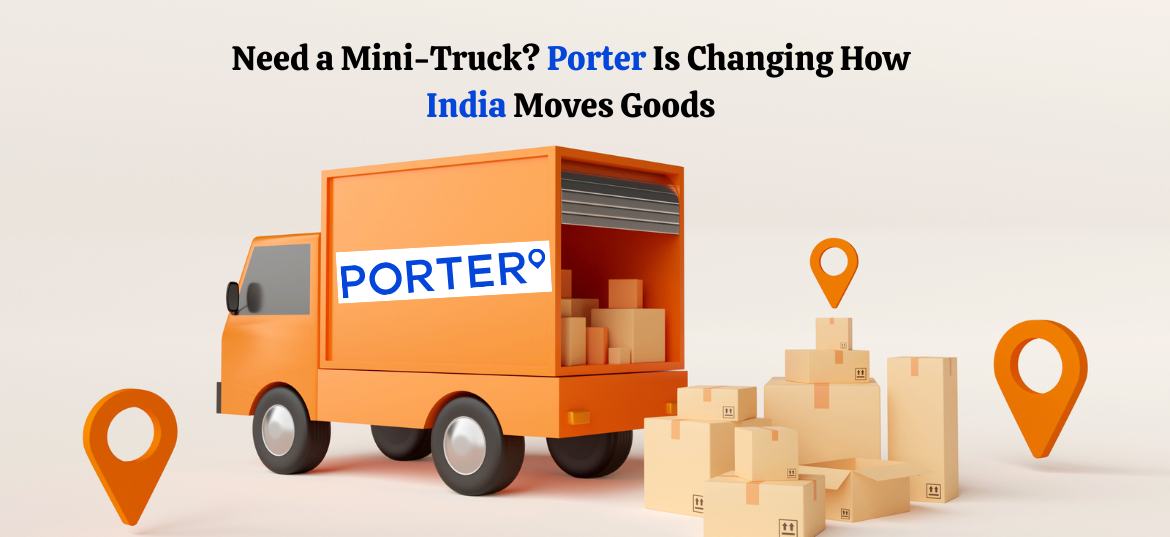
Consider a situation when you have to transfer a fridge to another side of the city, to your small shop, or when you have to have an urgent e-commerce delivery within a few hours. This has long been a headache in India: delays, murderous charges, lost promises. That’s where Porter, introduced in the year 2014, by Deepak Garg, which is not merely a logistics platform, it is a lifeline of movers, sellers and the small business of urban India.
Being a technology-first, customer-oriented company, Porter has made logistics a seamless, trustworthy experience to thousands of businesses and ordinary users.
The Founding Story
The IIT Delhi alumni, Deepak Garg, has observed a challenge we all face: it is a complex and untrustworthy process of transporting goods in Indian cities. Shopkeepers, online vendors and home relocating families were wasting hours to locate cars, haggle over prices and endure delays.
His vision was of an on-demand logistics helper – a service that you could hire a truck, tempo, or van within minutes, watch the truck on the screen, and have your stuff delivered to you on time without the hassle. It began as a small group in Bengaluru and soon emerged to be the fastest-growing intra-city logistics solution in India.
Porter, though the Customer Lens.
Porter is not just about trucks but it is about people and convenience. In the mind of a customer:
- Businesses (SMEs, E-Commerce Sellers)
Issue: Small businesses could not provide products in a reliable way without spending much money.
Porter’s Solution:
- Timely reservation of vehicles either on a single delivery or repetitive delivery.
- Fair and open pricing
- End customer, and business real time tracking.
Impact: SMEs save time, reduce the delivery expenses by up to 30 and are able to concentrate on expansion rather than on logistical hassles.
- Personal Deliveries and Home Movers (Individuals).
Issue: Transporting furniture, appliances or bulk groceries in the city is time consuming.
Porter’s Solution:
- Various vehicle choices including mini-van and truck.
- Simple application interface to choose, plan, and monitor your movement.
- Drivers that have been trained to carry goods in a safe manner with minimal damages.
Impact: The customers will make more sense knowing that their goods will be safe and on time.
Business Model
The business model created by Porter is designed in such a way that it delivers to the customers first and remains scalable:
| Aspect | How it Benefits Customers |
| Platform-based | Connects customers with verified drivers instantly |
| Transparent Pricing | Customers see exact cost upfront—no surprises |
| Commission-based Revenue | Only charges a small percentage per delivery, keeping it affordable |
| Subscription & Bulk Services | Businesses can schedule regular deliveries hassle-free |
Product Ecosystem.
- Porter App for Customers:
- Sleek interface and easy booking process.
- Selecting a vehicle depending on the magnitude of the load.
- Live monitoring and updates.
- Instant digital payments.
- Porter App for Drivers:
- Routing optimization proposals lower delivery time.
- Elastic job acceptance and earning disclosure.
- The rating system will guarantee high standards of services.
- Porter (SME Solution) Business:
- Scheduled and bulk delivery.
- Data analytics dashboard to monitor efficiency in delivery.
- 24/7 account support.
- Added Customer Value:
- Porter Premium: Express delivery on urgent orders.
- Porter Storage: The Company provides short-term storage facilities to business persons.
- Insurance alternatives: Goods valuable and peace of mind.
Porter is growing because of listening to customer pain points:
- Urban Focus: Focus in the cities where SME density and delivery demand are high.
- Driver Incentives: Dependable trained drivers will be available to provide a good customer experience.
- Feedback Loops: All the deliveries are rated and the customer feedback promotes improvement.
- Hyperlocal Marketing: Word-of-mouth by small businesses and even individual users that are satisfied.
Conclusion: Porter continues to be considered a reliable, quick and trustworthy urban logistics solution.
Customer-Oriented Entrepreneurship Lessons.
- Problem solve: Get attention to what annoys your customer every day.
- Make technology available: ease complicated services with user-friendly applications.
- Transparency creates trust: Customer confidence is created through transparent pricing and tracking.
- Empathy: Be fair with customers and other service providers.
- loop on feedback: Continuously make it better depending on user experiences.
Future Outlook
The Indian cities logistics is currently ready to be developed, as e-commerce and SMEs need to have quicker and smarter deliveries. Porter is broadening its offerings to include more than city logistics to include warehousing, supply chain analytics, and premium services with a customer-first approach.
Conclusion
Porter is not just a delivery platform- it is a customer partner, which makes businesses flourish and people get their lives running with ease. Porter has transformed the Indian urban logistics by bringing together technology, transparency, and empathy.
Want to learn from more startup success stories like porter? Read More Case Studies and discover how founders turned ideas into global businesses.
FAQs
-
What is Porter?
A tech-driven platform connecting you with trucks and vans for fast, reliable deliveries. -
Who can use Porter?
Small businesses, e-commerce sellers, or anyone needing intra-city transport. -
How to book?
Use the Porter app to select a vehicle, set pickup/drop points, and track deliveries. -
Are drivers trustworthy?
Yes, all drivers are verified, rated, and trained to handle goods carefully. -
Payment options?
Digital wallets, UPI, debit/credit cards, or in-app cashless payments.