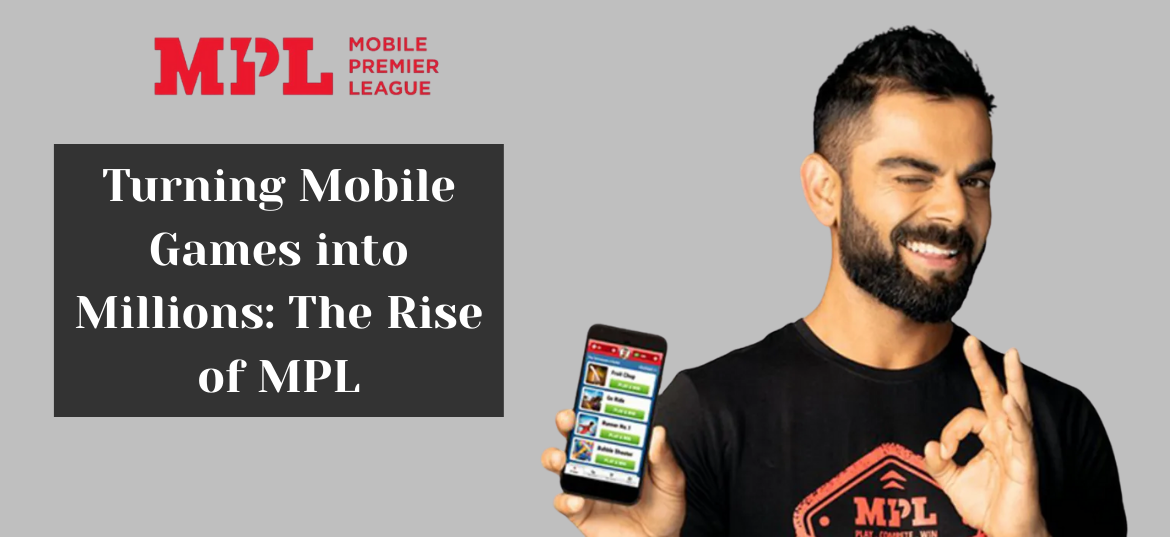
Turning Mobile Games into Millions: The Rise of MPL
Introduction
India’s gaming market has grown in the past decade, thanks to affordable smartphones, internet and increasing demand for digital entertainment. In the midst of this revolution, Mobile Premier League (MPL) became one of the most successful brand names. Established in 2018, MPL positioned itself not only as a gaming application but as a mobile e-sports ecosystem, where users can compete, win real rewards, and even pursue professional gaming.
Within three years, MPL grew aggressively to 90 million+ users in India and Southeast Asia, having raised more than $375 million in funding, and becoming a unicorn company in 2021. But it’s also faced challenges, such as high cash burn, cutthroat competition, and regulatory heat in India’s online gaming space.
Founding Story
MPL was started in 2018 by Sai Srinivas Kiran G and Shubham Malhotra, both serial entrepreneurs, who had previously co-founded CREO, a hardware startup subsequently acquired by Hike Messenger.
The founders understood that even though India boasted millions of recreational gamers, the market still did not have a centralized platform to organize tournaments, fantasy leagues, and competitive gaming with real-world rewards. They could see MPL as the “App Store for Games” a one-stop shop where developers would be able to host their games, and players would be able to play, compete, and win prizes.
Business Model
MPL is a real-money gaming and e-sports marketplace model.
Revenue Streams:
- Entry Fees & Commissions – Small entry fees are paid by players to participate in tournaments; MPL charges a commission while paying out the prize pool.
- In-App Purchases – Users purchase tokens, top up cash wallets, or buy fantasy sports entries.
- Advertising Partnerships – Brands sponsor tournaments or place ads in the app.
- Developer Partnerships – MPL features third-party games and revenue is shared with developers.
MPL’s value proposition was straightforward: high-engagement, low-cost gaming for India’s mobile-first consumers. For just ₹5 or ₹10, customers could participate in fantasy cricket tournaments or informal games such as Fruit Chop, Ludo, or Chess.
Growth & Expansion
2018–2019: Entered India, tied up with cricketer Virat Kohli as brand ambassador, achieving mass popularity.
2020: Soared during the COVID-19 lockdowns, when mobile gaming consumption skyrocketed.
2021: Launched in Indonesia and the U.S.; became India’s second gaming unicorn after Dream11.
2022–2023: E-sports, skill-based games, and alliances with international developers.
MPL also became the official kit sponsor of the Indian cricket team (2020–2023), further strengthening its recall among cricket enthusiasts.
Product Ecosystem
MPL created a multi-layer gaming platform with a diversified portfolio:
- Fantasy Sports: Cricket, football, basketball tournaments with real-money pools.
- Casual Games: Carrom, Ludo, Fruit Chop, Chess, Bubble Shooter.
- E-Sports Tournaments: Mass-scale competitive game events.
- Developer Integration: Third-party developers operate games through MPL.
- MPL Wallet: Integrated payments wallet for deposits, withdrawals, and winnings.
- Global Expansion: MPL expanded to Indonesia, U.S., and Europe with localized products.
This ecosystem approach transformed MPL from a standalone gaming app to a gaming super-app.
Challenges
- Regulatory Uncertainty – Real-money gaming is repeatedly banned and litigated in India. It is considered gambling by some states.
- Cash Burn – Excessive marketing expenditures (celebrity endorsements, sponsorships) resulted in escalating losses.
- Competition – Dream11 has a monopoly in fantasy sports; WinZO, Zupee, and Games24x7 compete with casual gamers.
- User Trust Issues – Issues related to addiction, responsible gaming, and delayed withdrawals impacted credibility.
Lessons for Entrepreneurs
- Timing is Everything – MPL benefited from affordable internet (Jio) and gaming demand created by lockdown.
- Build an Ecosystem, Not Just a Product – Hosting third-party games helped it diversify beyond fantasy cricket.
- Branding Matters – Endorsement by Virat Kohli and Team India sponsorship provided it with mainstream publicity.
- Global Thinking Early – MPL took its operation to Indonesia and the U.S., not becoming dependent only on India.
- Beware of Regulations – Businesses in sunrise sectors must proactively prepare for policy risks.
Conclusion
MPL’s trajectory mirrors the potential and pitfalls of India’s gaming boom. A startup that started in 2018, it became a multi-billion-dollar company within three years, building India’s e-sports ecosystem. However, its future hinges on how successfully it would weather regulatory wars, balance profitability, and maintain user trust in an industry perpetually in the crosshairs.
For founders, MPL is an instance of rapid scaling, ecosystem creation, and risk of doing business within a volatile regulatory landscape.
For more startup insights, read our other case studys.